
Finding the right health provider often involves more than simply choosing the closest clinic.
Depending on the reason you are seeking treatment, you may want to look at the practitioners’ qualifications, the types of conditions they work with, the rehabilitation facilities available and whether the clinic offers services suited to your circumstances.
For people researching physiotherapy and rehabilitation in Melbourne’s north, Physium is one Mill Park clinic worth knowing about.
Physium provides physiotherapy, osteopathy, Clinical Pilates and rehabilitation services from its Mill Park practice. Its approach is built around combining hands-on treatment with structured exercise and rehabilitation, with facilities that include treatment space, a rehabilitation gym and a Clinical Pilates studio.
Why Physium may be relevant to Melbourne Talk readers
Melbourne Talk covers a broad range of local businesses and services to help readers understand what options are available around the city.
Health and rehabilitation services are one of those areas where doing some research before choosing a provider can be particularly useful. Different clinics may focus on different conditions, treatment approaches or types of patients.
Physium may be relevant to people looking into care for sports injuries, musculoskeletal problems, spinal conditions, chronic pain or recovery following surgery. The clinic also provides rehabilitation services for people managing workplace and transport accident injuries, as well as eligible NDIS and Medicare patients.
Its Mill Park location may make it particularly relevant for people living or working in Melbourne’s northern suburbs.
Physium combines several services in one clinic
One feature of Physium is the range of services available within the same practice.
The clinic provides:
- physiotherapy for musculoskeletal injuries, sports injuries, spinal conditions and chronic pain
- osteopathy addressing structural, functional and postural factors
- Clinical Pilates for rehabilitation, strength, flexibility and movement
- sports medicine and return-to-sport rehabilitation
- post-operative rehabilitation following shoulder, knee, hip and joint replacement surgery
- NDIS services for plan-managed and self-managed participants
- WorkSafe and TAC rehabilitation
- Medicare Chronic Disease Management services for eligible patients with a GP referral.
Having these services in one location may be useful for people whose rehabilitation involves more than one type of treatment or exercise program.
Readers should confirm which service is most appropriate for their circumstances directly with the clinic or their treating health professional.
The team behind Physium
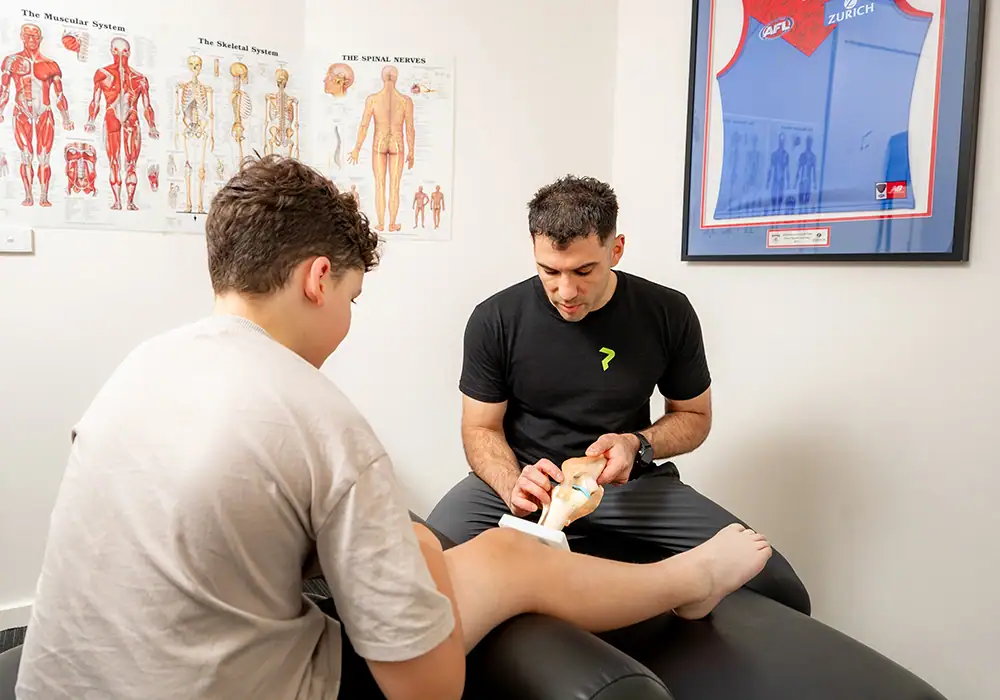
Physium is led by Director and Senior Physiotherapist Peter Gavalas.
Peter holds a Bachelor of Health Science and a Master of Physiotherapy Practice and is a registered member of the Australian Physiotherapy Association and Sports Medicine Australia.
His background includes 15 years of clinical experience across private practice and elite sporting environments, including work with the Victorian Institute of Sport and Australian Institute of Sport.
His own history as a high-level athlete, including undergoing ACL reconstruction, meniscus repair, knee arthroscopy and foot surgery, also informed the philosophy behind the clinic.
The Physium team also includes physiotherapist Teagan Ferris, whose areas of interest include sports injuries, spinal presentations, early post-operative rehabilitation and return-to-running and court-sport programs.
Stephanie Paras, an osteopath and the clinic’s Clinical Pilates Manager, works across areas including women’s health, spinal and postural presentations, pregnancy and postnatal care, while also leading Physium’s Clinical Pilates program.
An approach influenced by elite sports rehabilitation
Physium was established around the idea that people in the broader community should be able to access the same level of structure and attention to rehabilitation commonly associated with elite sport.
In practice, the clinic says its assessments aim to look beyond the immediate symptoms and identify factors contributing to the problem.
Treatment may combine hands-on care with exercise programming, while rehabilitation progress is assessed against factors such as range of motion, strength, movement control and functional capacity rather than simply the amount of time that has passed.
The clinic also uses imaging selectively where it is expected to influence clinical decision-making.
That structured approach may be particularly relevant for people who want to understand how their rehabilitation is progressing and what they are working towards at each stage.
Rehabilitation facilities at the Mill Park clinic
Physium’s Mill Park facility includes treatment areas, a rehabilitation gym and a Clinical Pilates studio.
This allows patients to progress from initial assessment and treatment into exercise-based rehabilitation within the same practice.
For someone recovering from a sporting injury or surgery, that may mean treatment, strengthening and later-stage rehabilitation can all form part of a coordinated program rather than being handled in separate locations.
Physium also states that its clinicians hold weekly case discussions and specialist sessions and work with GPs, surgeons, sports physicians and pain specialists where additional clinical input is required.
Sports injuries and return-to-sport programs
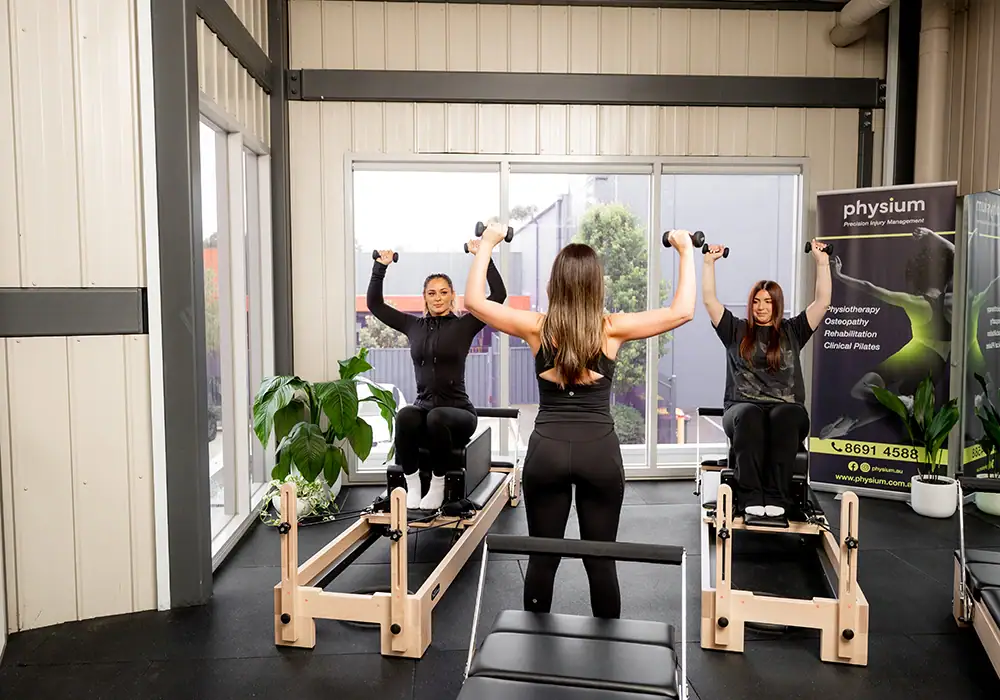
Physium’s sporting background is a significant part of its positioning.
The clinic works with athletes at different levels, rather than limiting its services to professional or elite competitors.
Its sports rehabilitation services cover injury assessment, rehabilitation, injury prevention and structured pathways back to sport.
That may be relevant for Melbourne Talk readers involved in local football, netball, running, gym training, court sports or other recreational activities who are researching treatment following an injury.
As with any injury, the appropriate treatment and return-to-sport timeline will depend on the individual, so it is important to discuss your circumstances with a qualified practitioner.
Post-operative and longer-term rehabilitation
Physium also works with people recovering from surgery.
Its post-operative programs include rehabilitation following shoulder, knee and hip procedures as well as joint replacement surgery.
The clinic’s rehabilitation approach uses measurable factors such as strength, range of movement and functional capacity to guide progression.
Physium also treats people managing chronic pain and ongoing musculoskeletal conditions, so its services are not limited to sporting injuries or short-term rehabilitation.
Practical information about Physium
Physium is located in Mill Park, Melbourne.
The clinic is open Monday to Friday from 6:00am and also offers Saturday appointments.
Appointments can be arranged directly with Physium by calling (03) 8691 4588 or emailing admin@physium.com.au. You can visit physium.com.au website to learn more about its team, services and current appointment information.
Is Physium worth considering?
If you are researching physiotherapy, rehabilitation, osteopathy or Clinical Pilates in Melbourne’s northern suburbs, Physium is one business worth considering as part of your research.
Its Mill Park clinic brings several rehabilitation services together, while its team has experience across private practice, sports rehabilitation and other areas of musculoskeletal care.
Melbourne Talk does not provide physiotherapy or healthcare services, and inclusion on this page should not be interpreted as individual medical advice or a guarantee that a particular provider will be right for you.
Before choosing any healthcare provider, consider your own needs, review the provider’s current information and ask any questions that are important to your circumstances.

